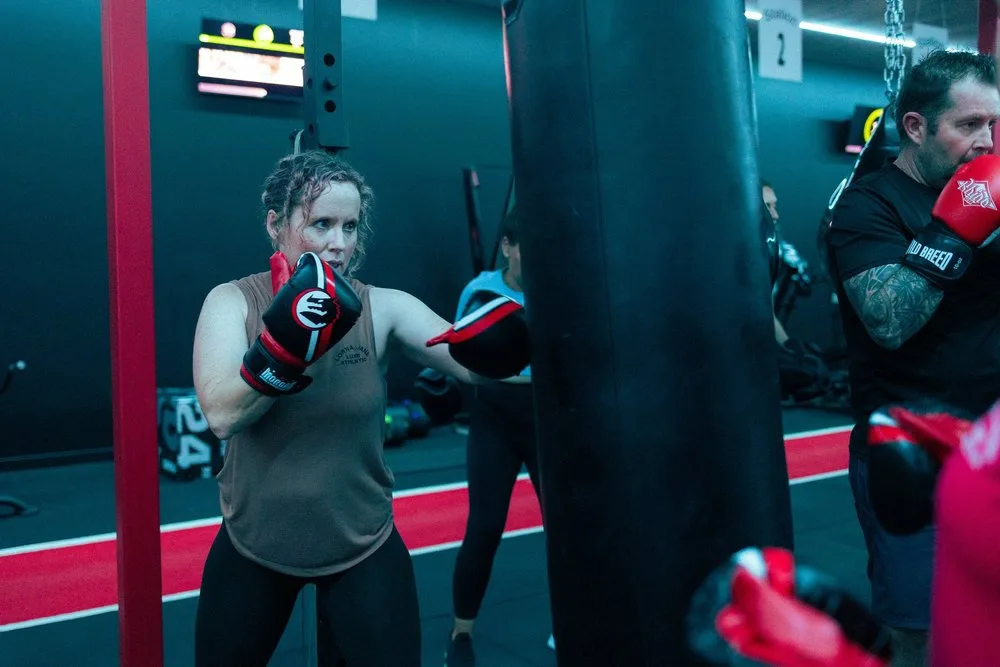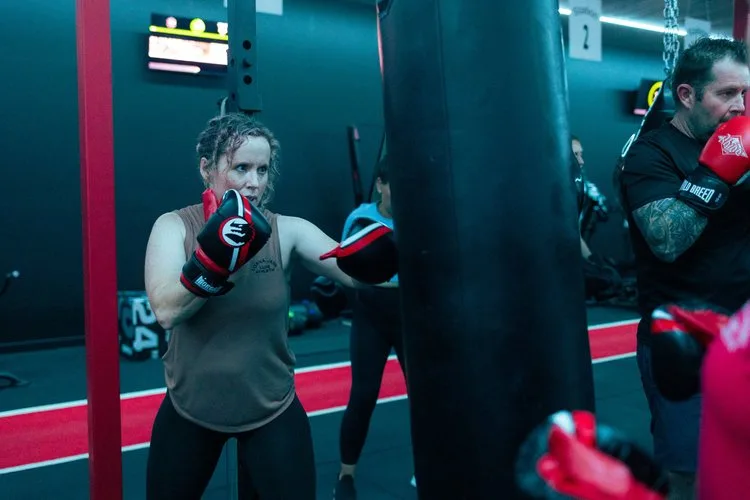
You're halfway through a round on the bag, finally finding a rhythm, when a trainer steps in beside you. "Bring that right hand back to your chin." You nod and fix it, but for a moment your face goes hot. Part of you wonders whether you were doing everything wrong, and whether the whole room just heard.
That small sting is very common, especially for adults who haven't been coached at anything since school. Most of us are used to being the person who knows what they're doing at work or at home. Being corrected in front of others can feel like a step backwards. With a slightly different way of hearing it, feedback becomes one of the most useful parts of a class, and the moment of embarrassment fades much faster.
Why a correction can sting
When someone points out a mistake, our brains tend to jump from "that punch needs fixing" to "I'm not good at this." The first is a comment about one movement. The second is a judgement about you as a person, and nobody said it out loud. You added it yourself.
Adults also carry old experiences into the room. Maybe a teacher once made an example of you, or you were always the last one picked in PE. Those memories can make a friendly cue from a coach feel bigger than it is.
There's also simple fatigue. Halfway through a hard round, you have less patience left and your self-talk tends to get harsher. A correction that would barely register on a calm day can feel personal when you're tired and sweaty.
What a correction really tells you
Trainers correct the people they're watching, and they watch the people who are working. A cue in the middle of a round usually means a coach saw you putting in effort and wanted that effort to pay off.
It also tells you something specific. "Turn your back foot" is far more useful than a vague sense that your cross feels weak. You now know exactly what to change, and once it's fixed you'll feel the difference straight away.
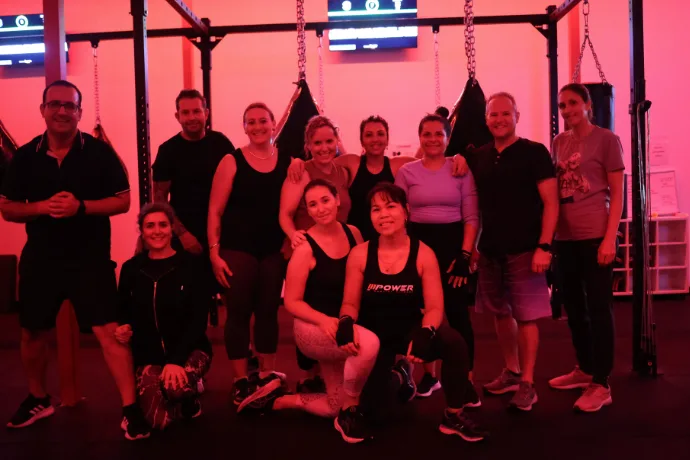
At MPower, every class is coach-led from start to finish, and our trainers offer modifications or extra challenge depending on where you're at. Giving cues is a normal part of every session for every person in the room, including people who have trained for years. Experienced members get corrected too. They've just stopped noticing it as anything unusual.
Common cues you might hear
Knowing what to expect takes some of the surprise out of it. In a Box class, you'll often hear reminders like these:
- Keep your chin tucked and your hands up by your face.
- Bring each punch straight back to your guard.
- Turn your back foot as you throw the cross.
- Breathe out as you punch.
- Keep your wrist straight when you land.
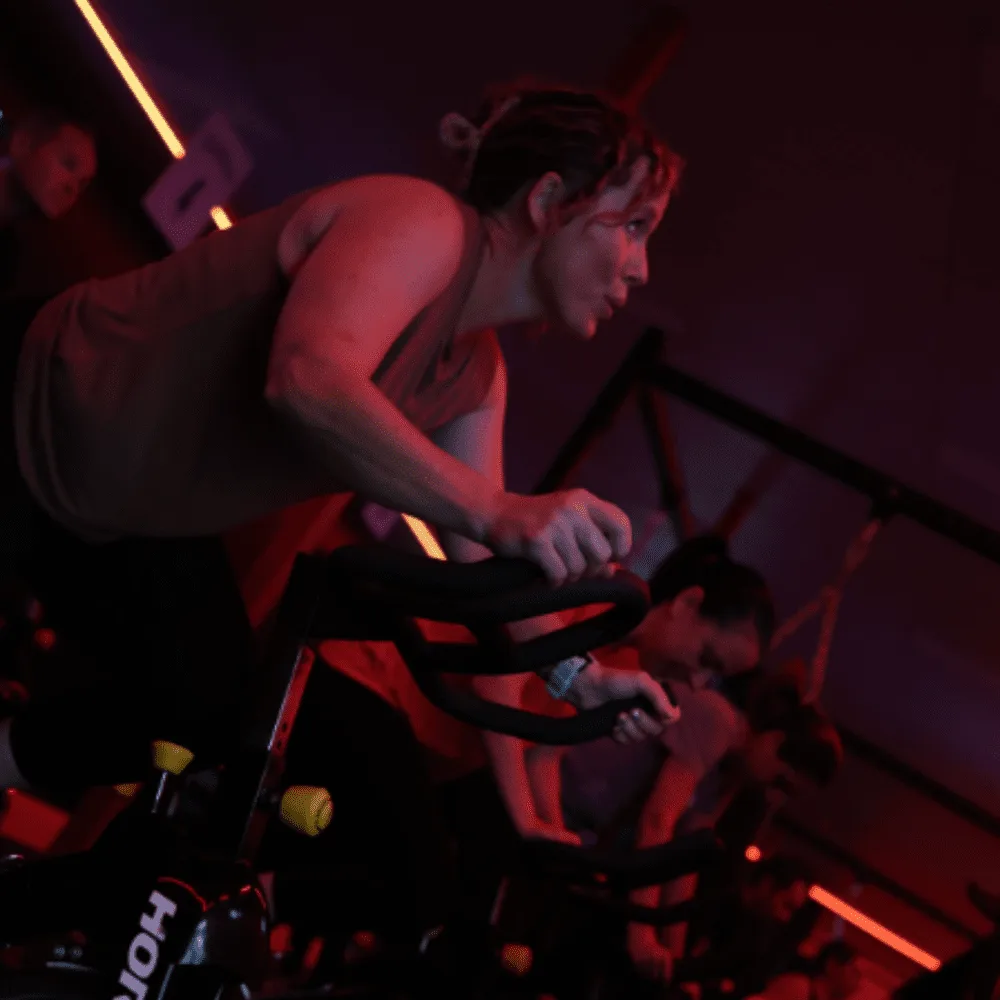
In Build, cues tend to focus on control and position, such as keeping your back flat when you lift or slowing down the lowering part of a movement. During Burn, a trainer might suggest easing off or pushing a little harder based on how you're moving and what your Myzone numbers are showing.
None of these mean you're doing badly. They're the standard building blocks of good technique, and everyone hears them again and again.
How to take a cue in the moment
- Make the change first and think about it later. Fix the movement straight away, then carry on with the round. You can reflect on it in the break.
- Give a quick signal. A nod or a thumbs up lets your trainer know you heard. It also helps you treat it as a normal exchange.
- Focus on the fix for a few rounds. Make that one cue your job until it starts to happen without thinking.
- Notice the difference. Many corrections make a movement feel easier or stronger almost immediately. Pay attention to that, because it turns the correction into a small win.
- Let the moment go. By the next round, your trainer has already moved on to someone else. You can too.
Ask for feedback before you need it
One of the easiest ways to take the sting out of corrections is to invite them. Before class, tell your trainer something like "I'd love some feedback on my hook today" or "Let me know if my squat looks off." Once you've asked, a cue feels like help you requested. It also gives your trainer a clear idea of what you want to work on.
You can also ask questions after class. If a cue didn't make sense, ask for it to be shown another way. People learn movements differently. Some like to see it demonstrated, some prefer a simple word to focus on, and others need to feel the position with a light hand guide. Good coaches are happy to try another approach.
When you get the same cue over and over
Hearing "hands up" for the fifth week running can feel discouraging. It's normal, and it doesn't mean you aren't improving. Habits like dropping your guard often come back when you get tired, and those are exactly the moments a trainer will spot.
Try to notice when the habit shows up. Is it near the end of a round, or when the combination gets longer? That gives you something to work on. You might keep the combination slower until your guard stays put, then build speed again. Many people find that a stubborn habit disappears quite suddenly after weeks of slow progress.
When feedback doesn't feel right
Good coaching is respectful and focused on the movement. If a correction ever leaves you feeling uncomfortable, or if a movement hurts after you've changed it, say so. Tell the trainer straight away if something causes pain. Speak to the studio manager if you have any concerns about how feedback was given. A good studio wants to hear about it.
If you have an injury or a health condition, let your trainer know before class so they can adjust their cues. For anything involving pain, an existing injury, pregnancy or a heart condition, check with your GP or physio before you train.
Practise taking feedback in a supportive room
Like any skill, hearing feedback well gets easier with practice. After a few weeks, a cue mid-round will feel as ordinary as the coach calling the next combination.
You can meet our trainers before your first session, then try it for yourself. MPower is offering a limited number of new members their first 2 weeks of unlimited Box Build & Burn classes free, with free boxing gloves to keep, a free Myzone heart rate monitor and a $0 joining fee. Claim your 2 weeks free and come and get coached.