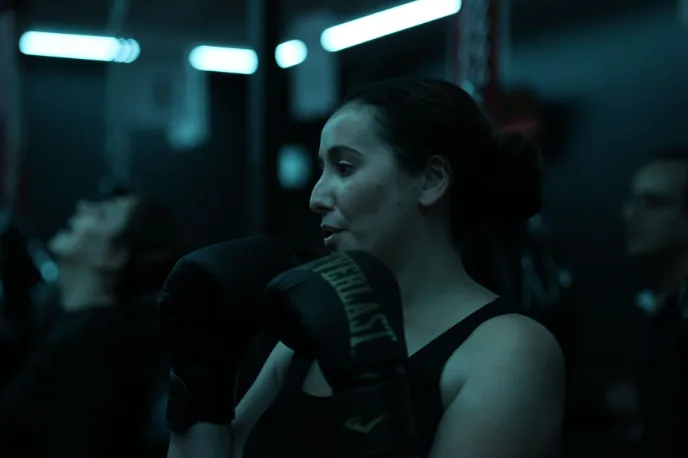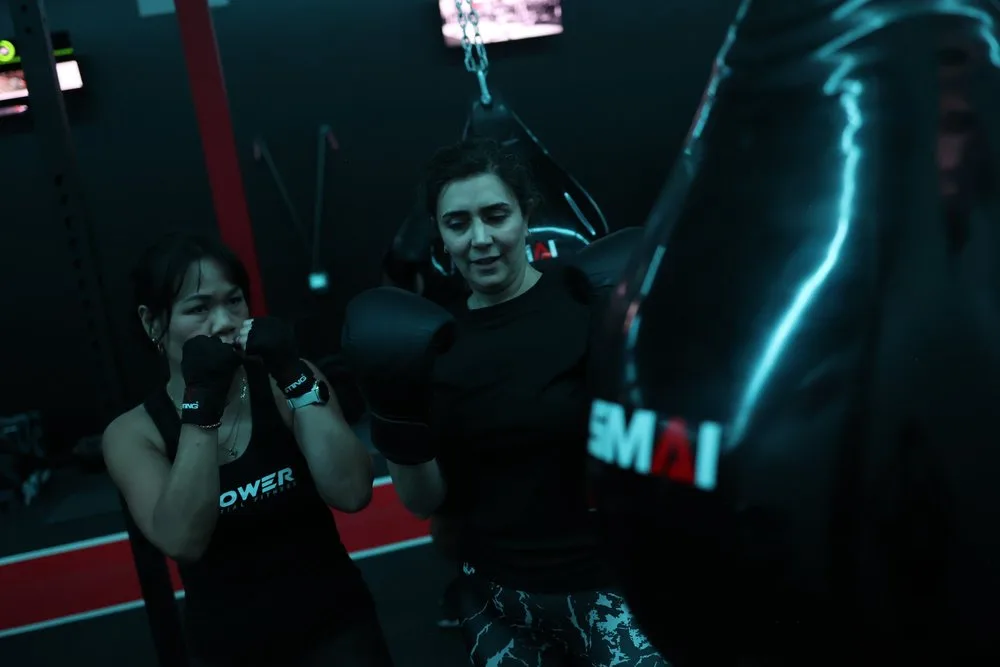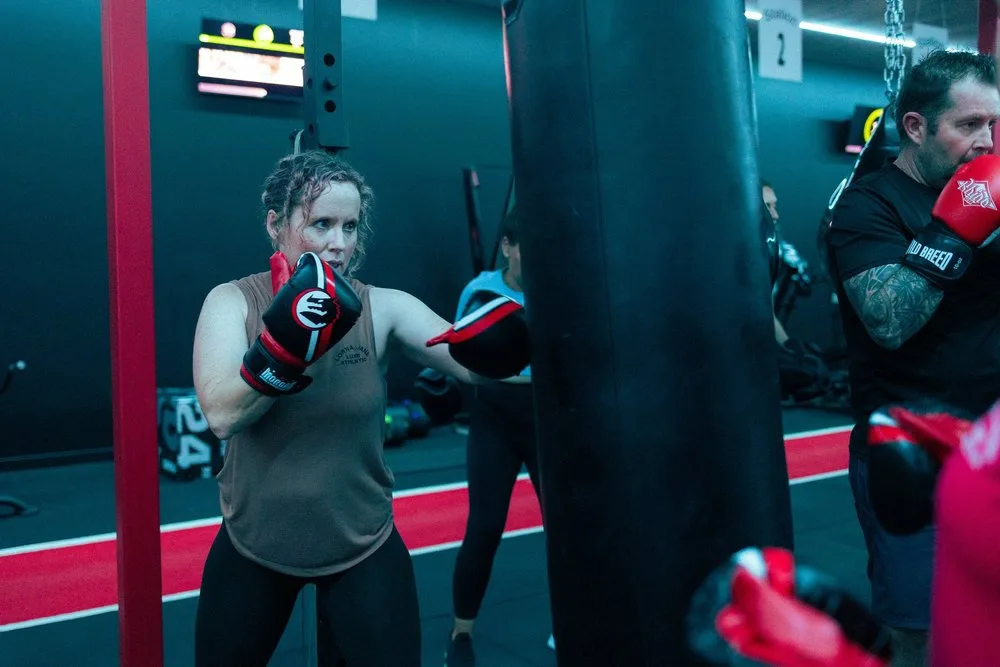
At MPower, you don't need to know how to punch before you walk in. The trainers teach everything in Box classes, from wrapping your hands to throwing your first jab. Still, some people like to know the basics in advance so the first session feels familiar. If that's you, this guide covers the two basics that every boxing class builds on. Those are your stance and your jab.
Read it and try the positions at home in front of a mirror if you like. Your trainer can fine-tune everything in class. Coaching in person will always beat a written guide, because a trainer can see small things in your posture that you can't feel.
Check with your GP or physio before you start boxing if you have any shoulder or wrist problems. The same goes for elbow or neck issues, or if you're returning to exercise after a long break.
Which side leads
Boxers stand partly side-on with one foot and one hand forward. The forward hand throws the jab.
Most right-handed people stand in what's called orthodox stance with the left foot and left hand forward. Left-handed people usually prefer southpaw stance, which puts the right foot and right hand forward. The idea is that your stronger hand sits at the back, where it has more room to build power for the cross.
If you're not sure which feels natural, try both. Your trainer can help you decide in your first class.
Setting up your stance
Your stance is your base. A good one keeps you balanced and ready to move at any moment. Build it step by step.
- Stand with your feet about shoulder-width apart. Then step your rear foot back so your feet are staggered, with the front toes roughly in line with your back heel.
- Angle your feet. Your front foot points mostly forward, and your back foot turns out at an angle. Lift your back heel slightly off the floor so you're on the ball of that foot.
- Soften your knees. A slight bend lets you move and absorb impact. Locked knees make you stiff and slow.
- Share your weight. Aim for roughly even weight between both feet. Keep your torso upright and slightly turned side-on.
- Bring your hands up. Rest your fists near your cheekbones, with your rear hand close to your chin. Keep your elbows tucked in towards your ribs.
- Tuck your chin. Drop it slightly and look forward through your eyebrows.
That's your guard. It might feel awkward at first. After a few classes it starts to feel normal, and you'll notice when you've let your hands drop.
Throwing the jab
The jab is a straight punch thrown with your lead hand. It's the most-used punch in boxing because it's quick and keeps you balanced. It also sets up almost every combination. In class you'll throw a lot of them.
Break it down like this.
- Start in your stance with your guard up.
- Extend your lead hand straight forward from your cheek towards the target. Keep the path straight, without looping out to the side.
- Rotate your fist as it extends so that by the end your palm faces the floor. This turns your knuckles into line with the target.
- Lift your lead shoulder slightly as the arm extends. This helps protect your chin.
- Stop just short of locking your elbow. Snapping the elbow straight can strain the joint.
- Bring the hand straight back along the same line to your cheek. The return matters as much as the punch.
- Breathe out sharply through your mouth or nose as the punch lands.
Your rear hand stays at your chin the whole time. That's the part many beginners forget.
Adding a step
Once the arm action feels comfortable, you can add a small step. Push off your back foot and take a short step forward with your front foot as you throw the jab, then let the back foot follow the same distance so your stance stays the same width. This lets you reach a bag or target that's a bit further away without leaning.
Keep the step small. Large steps pull your feet out of position and make it harder to throw the next punch.
Common beginner mistakes
Coaches commonly correct these in a beginner's first few boxing sessions.
- Dropping the rear hand. When the jab goes out, the other hand drifts down. Keep it glued to your chin.
- Flaring the elbow. If your elbow swings out to the side, the punch loops. Keep it pointing down until the arm extends.
- Leaning forward. Reaching with your upper body throws you off balance. Step closer instead.
- Holding your breath. Breathing out on each punch keeps you relaxed and stops you tiring as quickly.
- Bending the wrist. Your wrist should stay straight, in line with your forearm, when you make contact. A bent wrist can be injured, even when you're wearing gloves.
- Standing square. Feet that end up side by side cost you both balance and power. Reset your stance between combinations.
- Watching your hands. Look at the target, not your gloves.
Don't worry if you do all of them at once at first. Everyone does. Your trainer will usually fix one thing at a time.
Practising at home
A few minutes of shadowboxing at home can help the movements stick between classes. Stand in front of a mirror in your stance and throw slow jabs. Check your guard and your rear hand after each one. Speed comes later. Without gloves or a bag, focus on the shape of the punch and keep your elbow from snapping straight.
Try rounds of one or two minutes with a short break in between. Two or three rounds is plenty. If your shoulders get tired, that's normal, since holding your hands up is part of the training.
What comes after the jab
Once the stance and jab feel natural, you'll typically move on to the cross, which is the straight punch from your rear hand. Hooks and uppercuts come after that, and then you start putting them together into combinations. Every one of those relies on what's in this guide. A balanced stance gives you power, and a tight guard keeps your form tidy as the combinations get longer and you get tired.
The more classes you do, the faster this happens. Box classes are built around skill development, so you'll keep improving as long as you keep turning up.
Learn it properly in a Box class
The best way to learn your stance and jab is with a trainer watching. MPower's Box classes are skill-based boxing for power and coordination. Every Box class is coach-led and beginner-friendly. Read more about the format on the classes page. When you're ready, claim the 2 weeks free offer on the membership page, which includes your own pair of boxing gloves to keep.