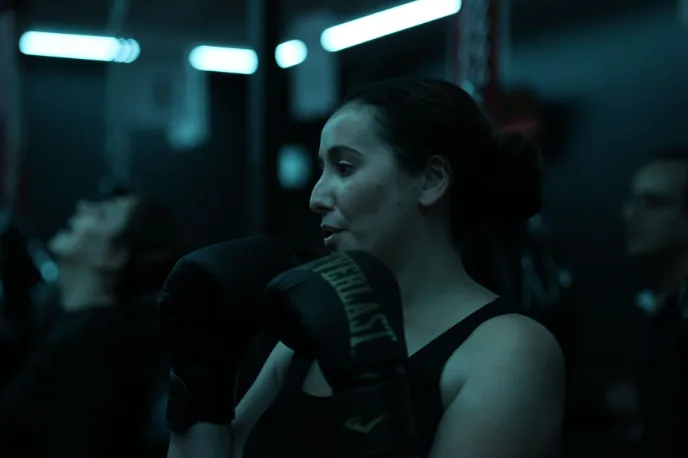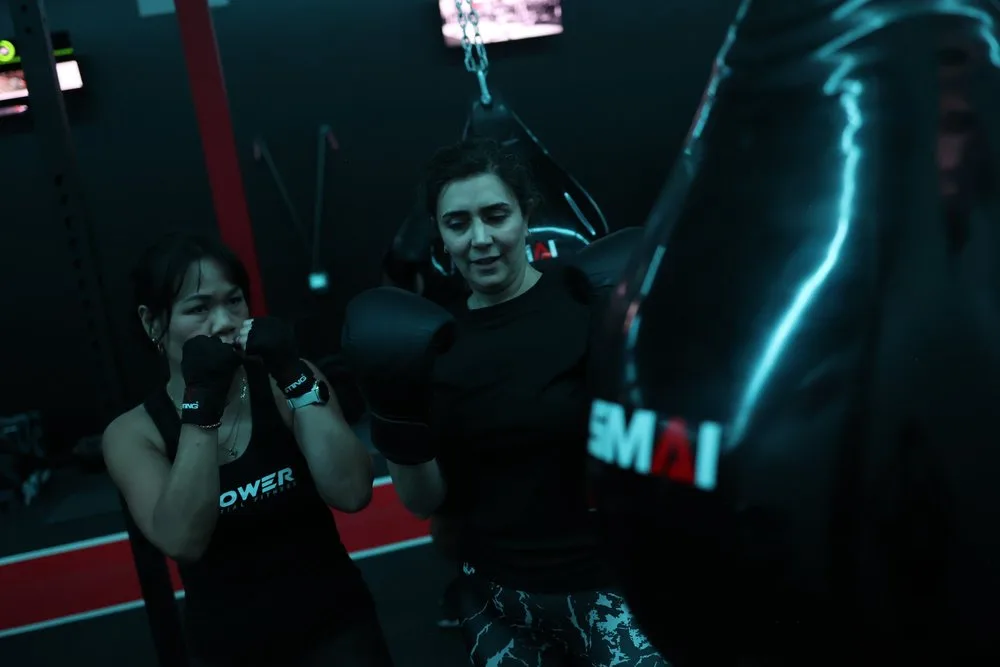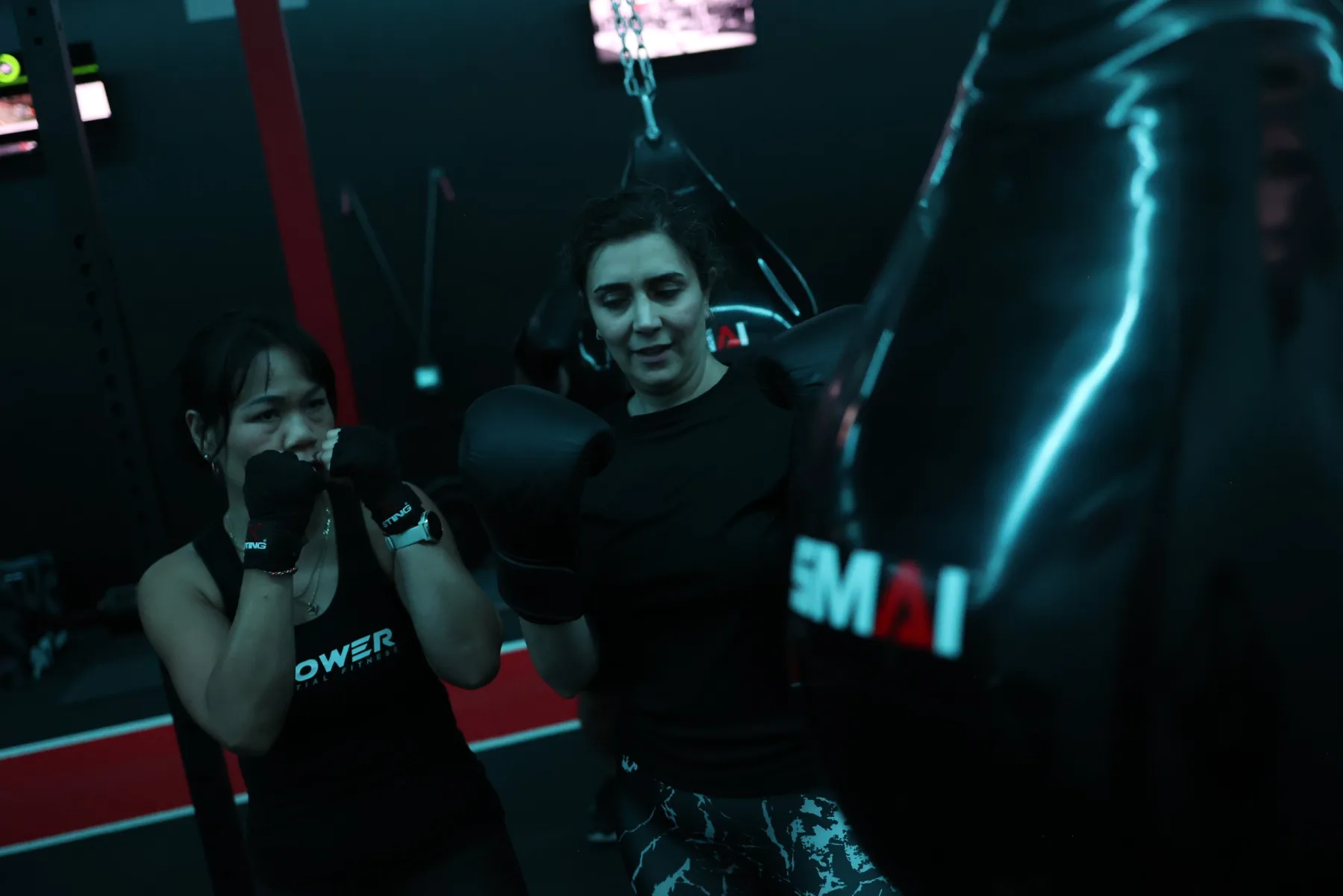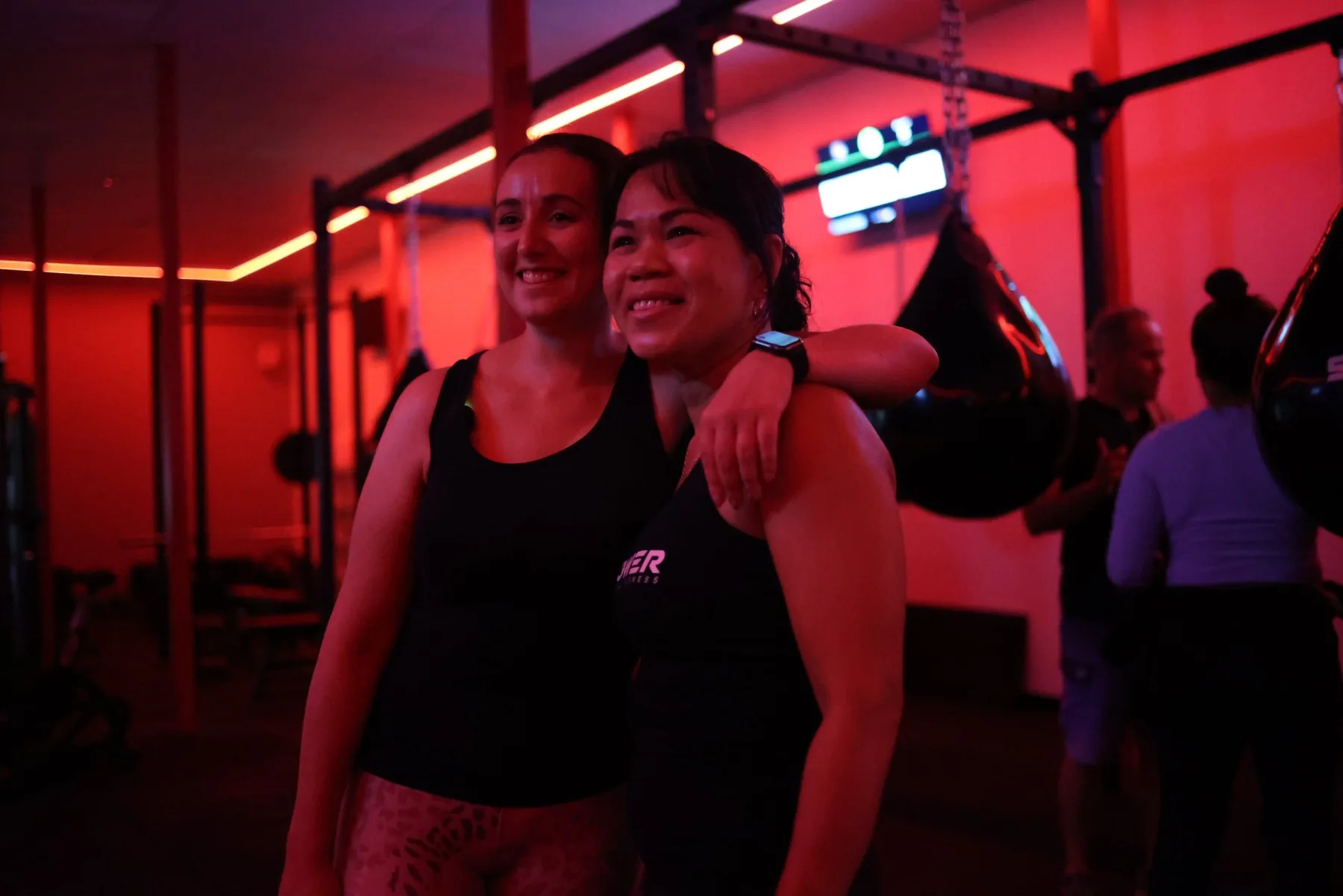
Walking into a new studio for the first time is easier with someone you know beside you. So is getting out of bed for a 6:00 am class when you've promised a friend you'll be there. Training with a mate can help you start, and it can help you keep turning up once the novelty wears off.
At MPower, community is a big part of how the studio works. Classes are built around people who train together rather than beside each other. Bringing a friend into that is one of the simplest ways to make it stick for both of you.
This post covers how to choose the right training buddy, how to ask them, how to plan your first sessions and how to keep the arrangement going without it turning into a competition.
Why a training buddy helps
A friend in the room helps in a few practical ways.
You're more likely to show up. It's easy to cancel on yourself. Cancelling on someone who is already packing their gym bag is harder.
The first class is less daunting. A new place full of new faces is a lot to take in. Having one familiar person nearby takes the edge off.
You have someone to talk it over with. Comparing sore muscles the next day is half the fun. So is swapping notes on the combinations you learned.
It's social time as well as training time. For people with busy lives, a regular class with a friend can double as a catch-up.
Choosing the right friend
The best training buddy isn't always your closest friend. Think about these things before you ask.
Similar schedules
If one of you can only train early and the other only after work, it's going to be hard to line up. Look at the timetable together and check that there are a few sessions you can both make. MPower runs classes from early morning through to the evening across the week, plus Saturday mornings, so there's usually some overlap.
Similar goals, or at least compatible ones
You don't need identical goals, but it helps if you both want roughly the same thing from training. If one person wants a gentle start and the other wants to go flat out every session, you might be better off booking the same class and doing your own thing within it.
Reliability
Pick someone who tends to follow through on plans. A buddy who cancels often can drag your own routine down with them.
Someone encouraging
Friendly rivalry can be fun, but a friend who needs to win every round can make training stressful. Look for someone who will cheer you on and doesn't mind being cheered on in return.
How to ask them
Keep it low pressure. Instead of asking a friend to "commit to a fitness program", ask them to come and try one class with you. Some ideas:
- Mention what you've enjoyed about your own classes, or what made you curious about boxing.
- Tell them they don't need to be fit or know how to box. MPower's classes are coach-led and beginner-friendly, and trainers offer modifications for each person.
- Point them to the classes page so they can see the formats for themselves.
- Suggest a specific day and time, rather than leaving it open.
If your friend is new to MPower, they can look at the 2 weeks free offer. It includes two weeks of unlimited classes with a $0 joining fee, plus free boxing gloves and a free Myzone heart rate monitor. Places are limited, so it's worth sorting sooner rather than later.
Planning your first sessions together
If you're both starting at the same time, try to book your first few classes together. A good plan for the first week is to try a couple of different formats so you both find out what you like.
BBB can be a good shared starting point because it covers a bit of everything in one session. If one of you is more nervous, Box is a steady way to begin, since the focus is on learning technique.
Car-pooling is simple, since the studio at 398 Keira Street has free off-street parking. Agreeing who drives on which day is one more small thing that keeps you both on track.
Training side by side without competing
One of the best things about Myzone in a shared class is that it removes the urge to compare. Your effort is shown as colour zones based on your own heart rate, so two friends of different ages and fitness levels can work equally hard and see that reflected in their colours.
A few other tips:
- Agree before class that you'll each work at your own pace. It takes away any pressure to keep up.
- Celebrate small wins. A sharper jab is worth noticing. So is simply turning up when it was hard to get out of bed.
- Let the trainer coach. If your friend's technique needs a tweak, leave it to the coach. Friendly advice mid-round can be distracting.
- Respect each other's off days. If your friend wants to take a lighter class or rest, support it.
Keeping it going
Plenty of training partnerships start well and then fade. These habits help.
Set regular sessions. Pick one or two fixed classes a week that you both attend. Regular slots are easier to protect than sessions planned day by day.
Have a plan for when one of you can't make it. Agree that the other person goes anyway. A training buddy is there to help you show up, so one person's busy week shouldn't cancel both sessions.
Check in each week. A quick message on Sunday night to confirm the week's sessions keeps plans from slipping.
Branch out. As you both settle in, you'll get to know other regulars in your classes. That bigger circle helps when your buddy is away or your schedules change.
What if your friends aren't interested?
That's fine too. Plenty of people start group fitness on their own and get to know others in class. Trainers know members by name, and people who train at the same times each week often start chatting. A training buddy is a helpful start, but you don't need one to feel part of the community.
Bring someone to class
Got a friend in mind? Send them this post and look at the timetable together to pick a session. New members can claim the 2 weeks free offer on the membership page, or call or message 0401 132 256 to ask any questions before you come in.