Breathing is automatic, so most of us never think about it. Then we start boxing, and suddenly it becomes obvious. New members often hold their breath while they concentrate on a combination, then finish the round gasping. Others breathe in short, shallow bursts that leave them feeling more puffed than they should.
Learning to breathe well is one of the simplest ways to make training feel better. It can also help you outside the studio, on days when stress is building and you need a moment to settle. This article covers both.
Why breathing matters in boxing
Good breathing keeps you relaxed, which makes your punches faster and less tiring. It also gives you a rhythm to work with when a round gets hard.
The most common habit to fix is holding your breath. When you're focused on your footwork and the next punch, it's easy to stop breathing without realising. A few seconds of that and your shoulders tighten up and your arms start to feel heavy.
Breathe out on every punch
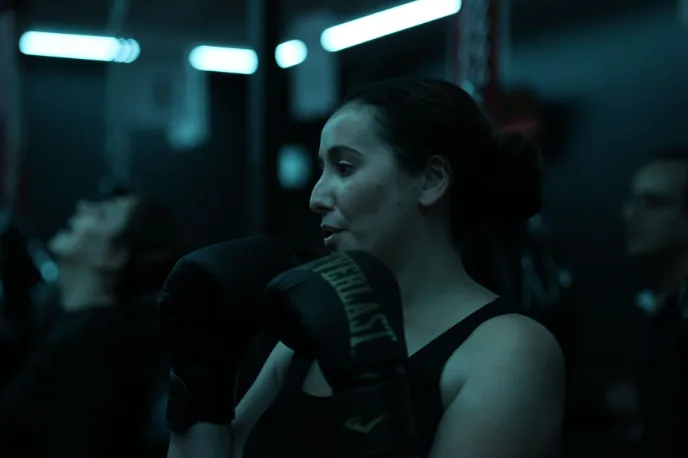
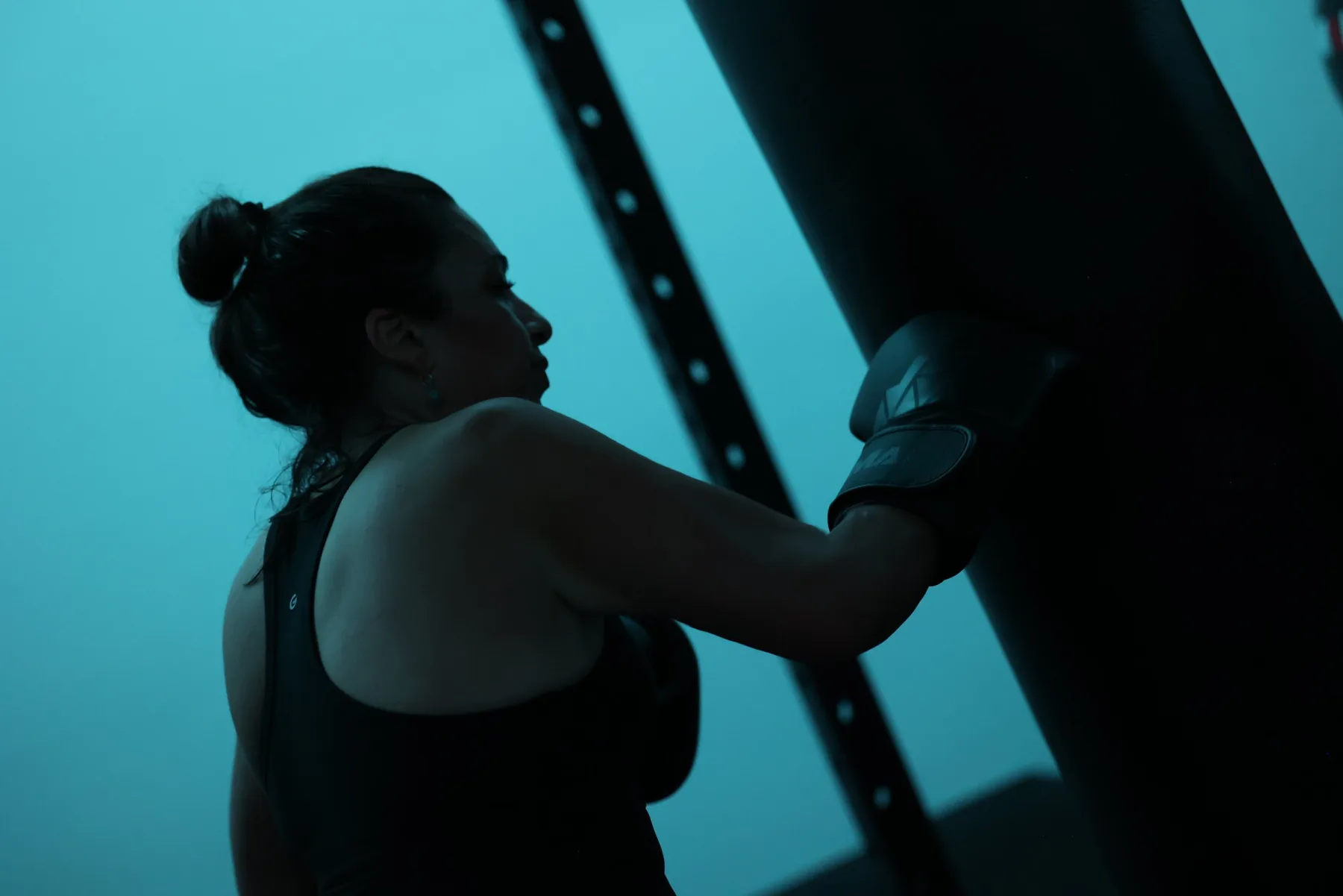
The basic rule in boxing is to breathe out sharply as you throw each punch. Many boxers make a short "tss" or "shh" sound through their teeth as they do it. That quick exhale does several useful things:
- It stops you holding your breath.
- It helps you tighten your core at the moment the punch lands.
- It sets a rhythm, so your breathing keeps pace with your combinations.
Between punches, let the breath come back in naturally. You don't need to force a big inhale. As your combinations get longer, you'll find a pattern where each punch gets its own short breath out and the inhale happens in the small gaps.
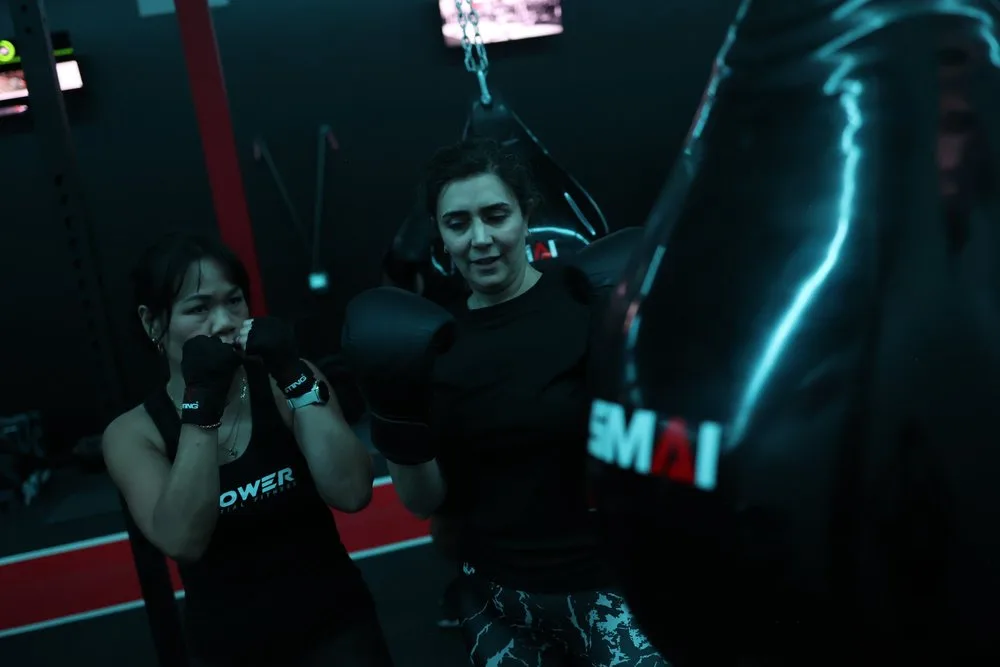
At first this can feel a little odd, and you might feel self-conscious about the noise. Most people around you will be doing the same thing. Our trainers teach real technique in Box classes, so ask them to watch your breathing if you're unsure.
Breathing during strength work
In Build classes, the general guidance is to breathe out during the hardest part of a movement and breathe in on the easier part. For a squat, that usually means breathing in as you lower down and out as you stand up. On a push-up, breathe in on the way down and out as you push away from the floor.
Try not to hold your breath through a whole set. If you have high blood pressure or a heart condition, holding your breath under strain is something to avoid, and you should check with your GP about strength training before you start. Let your trainer know too, so they can help you adjust.
Breathing in cardio rounds
In Burn, where you're combining boxing with bike cardio, your breathing will speed up a lot. That's normal. The aim is to keep it as steady as you can, rather than letting it become ragged and gulping.
If you feel your breathing getting out of control, ease off the intensity slightly for 20 or 30 seconds. Focus on a slightly longer, controlled breath out. Once it settles, build back up. Your Myzone heart rate monitor gives you live feedback on your effort, so you can see when you're working in your higher zones and when it might be time to back off a little.
Recovering between rounds
The short rest between rounds is where breathing can make a big difference. Rather than standing hunched over with your hands on your knees, try this:
- Stand tall with your hands on your head or hips to give your chest room to expand.
- Breathe in through your nose if you can.
- Breathe out slowly through your mouth, making the breath out a little longer than the breath in.
- Repeat until the next round starts.
Many people find this helps them start the next round feeling more settled.
Slow breathing for stressful days
The same skills you use in class can help when you're stressed at work or lying awake at night. Healthdirect notes that stress can cause fast and shallow breathing. Slowing your breath down may help you feel calmer and less tense.
Healthdirect suggests a simple technique. Breathe in slowly for a count of three, then breathe out slowly for a count of three. It may help to count a little longer on the breath out.
Beyond Blue also offers guided breathing and relaxation exercises on its website. Its advice includes breathing from your stomach rather than your chest, and breathing slowly through your nose if you can.
Some tips for getting started:
- Try it when you're already calm first, so it's familiar when you need it.
- Start with a couple of minutes. You don't need to do it for long.
- Sit or lie comfortably, with one hand on your stomach so you can feel it rise and fall.
- If you feel dizzy or light-headed, return to normal breathing.
If you have asthma or another breathing condition, talk to your GP before trying new breathing techniques.
When breathing exercises aren't enough
Breathing techniques are a useful tool for everyday stress, but they aren't a treatment for anxiety or panic on their own. See your GP if you're having frequent anxiety or panic attacks, or if stress is affecting your daily life. They can help you find the right support. You can also contact Beyond Blue on 1300 22 4636.
If you're in crisis, call Lifeline on 13 11 14, any time. In an emergency, call 000.
Breathwork expertise on our team
Whitney, one of the MPower coaches, is a personal trainer who is also a breathwork therapist. She has over 14 years in health and wellness, with a background that includes Muay Thai and boxing coaching as well as yoga. You can read more about all our coaches on the trainers page.
Practise in class
Good breathing gets easier with practice. Pick one habit, such as breathing out on every punch, and focus on it for a full class. Add the recovery breathing between rounds once that feels natural.
If you'd like a place to practise, MPower is offering a limited number of new members their first 2 weeks of unlimited Box Build & Burn classes free. You'll also receive free boxing gloves to keep and a free Myzone heart rate monitor, with a $0 joining fee. Claim your 2 weeks free and come and try it for yourself.