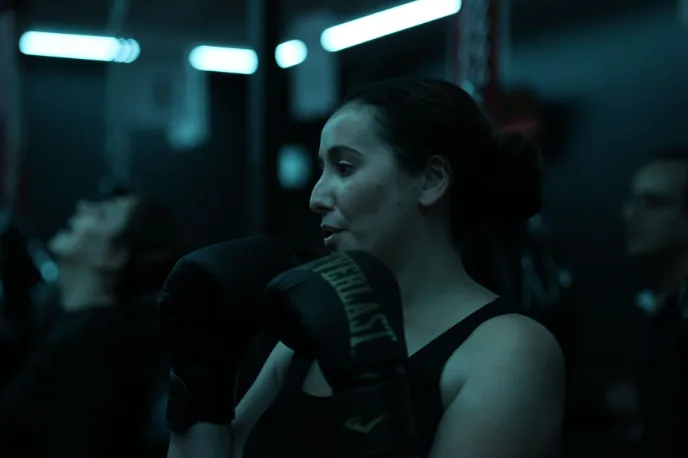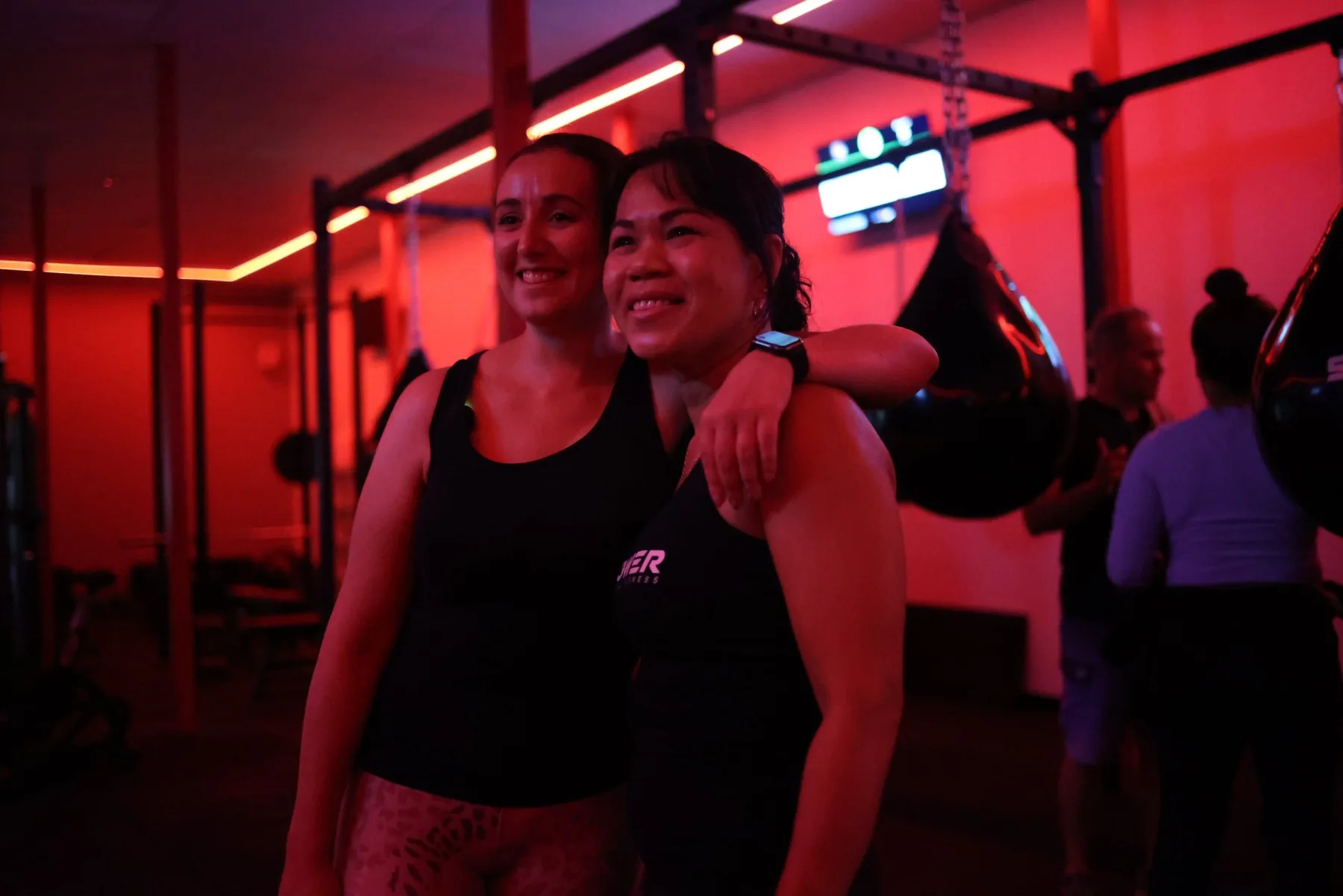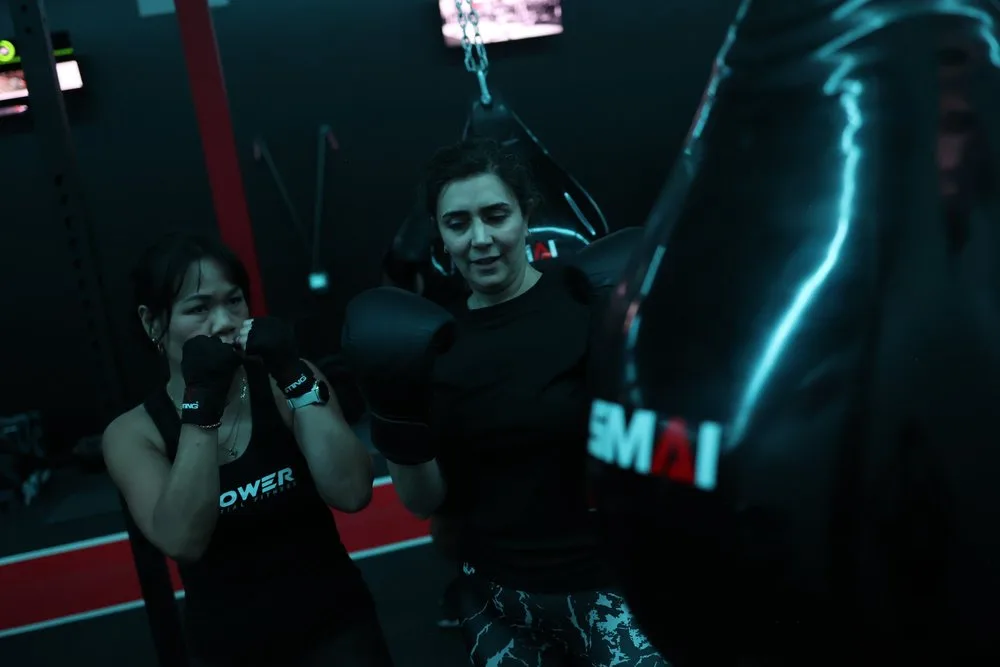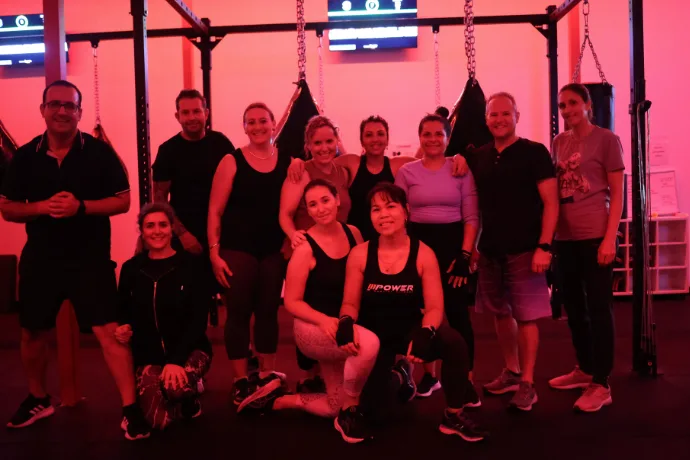
For a lot of people, the hardest part of a group class has little to do with the workout. What gets to them is the feeling that everyone can see them. You worry that your jab looks clumsy and that you'll go the wrong way in a combination. Your face goes bright red by the second round, and you're sure the whole room has noticed.
That self-conscious feeling is common, and it's one of the main things that keeps people from trying group training at all. The reassuring news is that psychologists have studied it, and the results suggest that other people are paying far less attention to you than it feels like.
The spotlight effect
In 2000, psychologist Thomas Gilovich and his colleagues at Cornell University published a set of studies on what they called the spotlight effect. This is our tendency to overestimate how much other people notice our appearance and behaviour.
In the best-known experiment, students were asked to put on a T-shirt with a large picture of the singer Barry Manilow on it, a shirt that had been tested in advance as embarrassing to wear. Each student then walked into a room full of other students. Afterwards, the shirt wearers were asked to guess how many people in the room had noticed the shirt. They estimated about half. In reality, fewer than a quarter had.
In other words, people thought they were roughly twice as noticeable as they were. The researchers suggested this happens because we each experience the world from the centre of our own attention. We know every detail of how we look and feel, so we assume others are just as tuned in. They aren't, because they're busy being the centre of their own attention.
What everyone else is doing in class
Think about what the people around you are focused on during a session. In a Box class, they're trying to remember a combination and keep their hands up. Burn has them watching the timer while they keep their legs turning on the bike. Over at the Build stations, the focus is on counting reps with good form.
Almost nobody has spare attention for what you're doing. Most of the room is having the same private conversation with themselves that you are. Many of them are also hoping nobody notices them.
There's one other reason people might glance your way. MPower classes are tracked live with Myzone, and some people like to keep an eye on their own effort during a round. When someone glances at the screen, they're checking their own numbers.
The things people worry about most
When new and returning members feel self-conscious, the same worries tend to come up. They look very different from the outside.
"My face goes bright red." In a high-intensity class, most faces go red. It's a normal sign that your body is working and cooling itself down, and no one in the room will think twice about it.
"I'll get the combination wrong." Everyone mixes up combinations, including people who have trained for a long time. Coaches see it constantly and will simply show you again.
"I'm slower than everyone else." Your effort is measured against your own heart rate zones, so there's no single pace you have to match. People at very different fitness levels train side by side in every session.
"I don't look like I belong here." Group classes at MPower are built for all levels. If you've been out of training for a while, or have never thrown a punch before, that's the normal starting point here rather than the exception.
Practical ways to feel more at ease
Knowing about the spotlight effect helps, but it won't make nerves disappear on its own. A few practical steps can take the edge off while your confidence builds.
- Tell your coach you're feeling nervous. Trainers would much rather know, and they can keep an eye out for you without making a fuss.
- Arrive a few minutes early. You'll have time to settle in and get your gloves on before the room fills up.
- Pick a spot that feels comfortable. Some people prefer the middle of the room so they can follow others. Others prefer the back. Either is fine.
- Give your attention a target. Focus on one technique cue for the whole class, such as keeping your chin down. A busy mind has less room for worrying about others.
- Bring a friend for the first few sessions. A familiar face can make a new room feel smaller.
- Give it more than one class. The first session is usually the most self-conscious you'll ever feel. Commit to at least four classes before you decide how you feel about it, so you're judging the experience on a normal day instead of on first-day nerves.
Confidence comes from repetition
Most people find that the self-conscious feeling fades within a few weeks of regular classes. The room becomes familiar and the trainers know your name. You also start to recognise the people beside you on the bags.
That's one of the real strengths of a community studio. Each time you show up, you're collecting evidence that you can walk into a room, have a go at something hard and come out fine. Over time, that evidence adds up to the kind of confidence that carries into other parts of life, from speaking up at work to trying something new on the weekend.
When self-consciousness is more than nerves
For some people, worry about being judged is intense enough to get in the way of everyday life. It might stop you going to work functions or meeting new people. If that sounds familiar, talk to your GP. Social anxiety is common and treatable, and your GP can help you find the right support. You can also call Beyond Blue on 1300 22 4636 to speak to someone. If you ever need urgent support, contact Lifeline on 13 11 14, or call 000 in an emergency.
Step into the room
The people you're worried about are mostly thinking about their own round. That leaves you free to focus on yours.
Every MPower class is coach-led and beginner-friendly, with trainers who offer modifications or extra challenge depending on where you're at. If you've been holding back because you're worried about being watched, our 2 weeks free offer is a low-pressure way to find out how it feels. A limited number of new members get 2 weeks of unlimited classes, free boxing gloves to keep and a free Myzone heart rate monitor, with a $0 joining fee. Meet the trainers first if it helps, then claim your 2 weeks free.